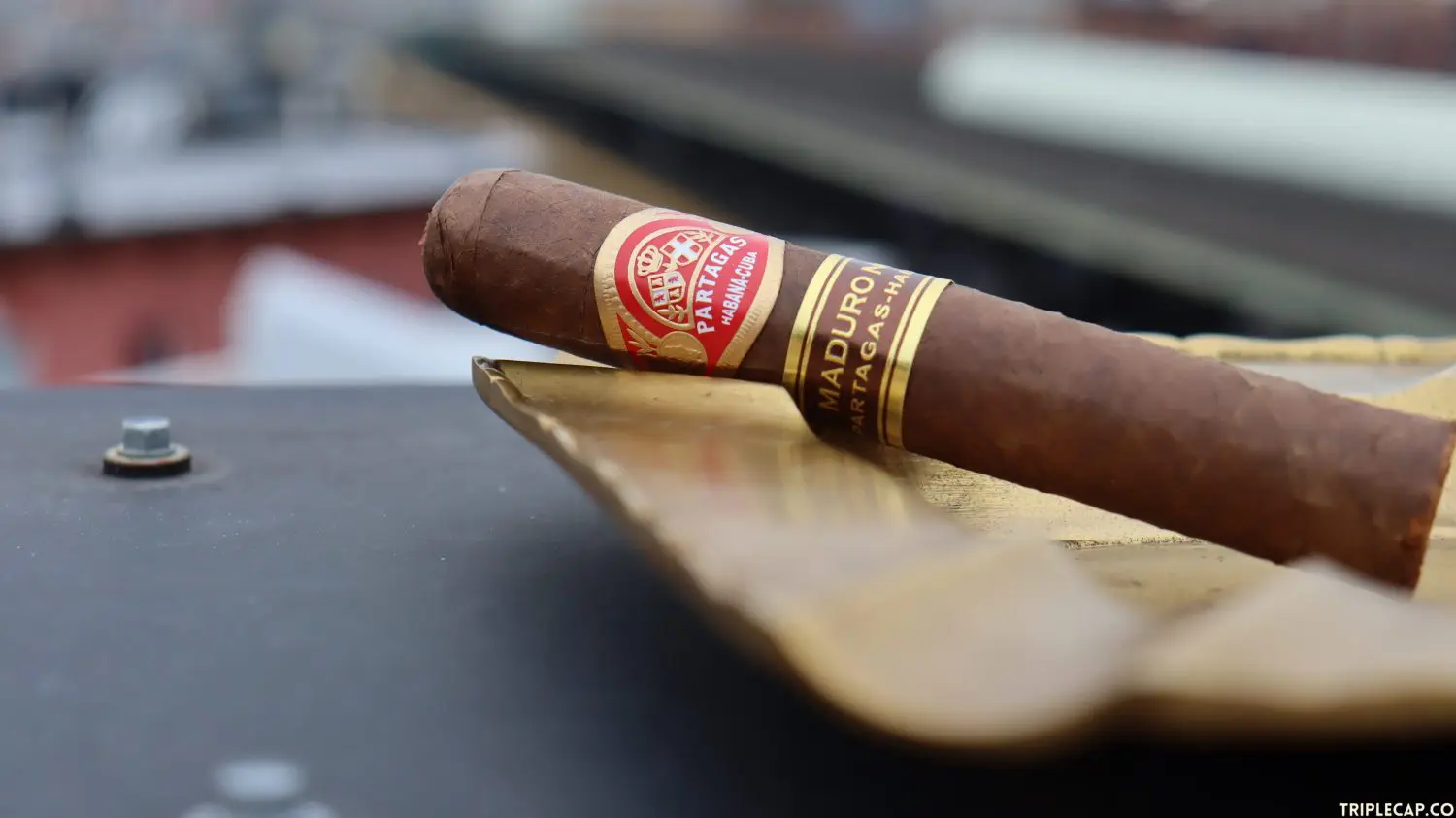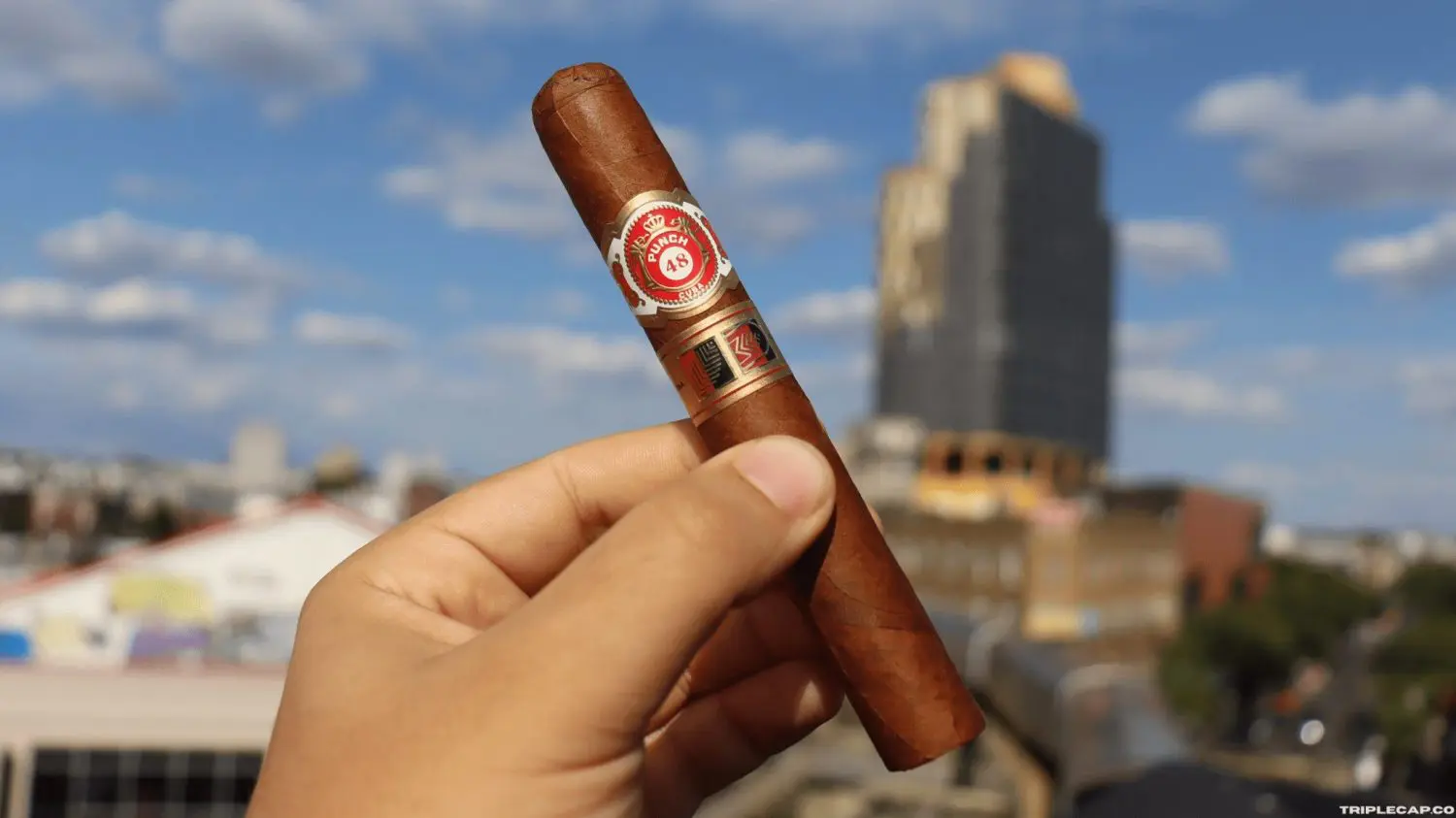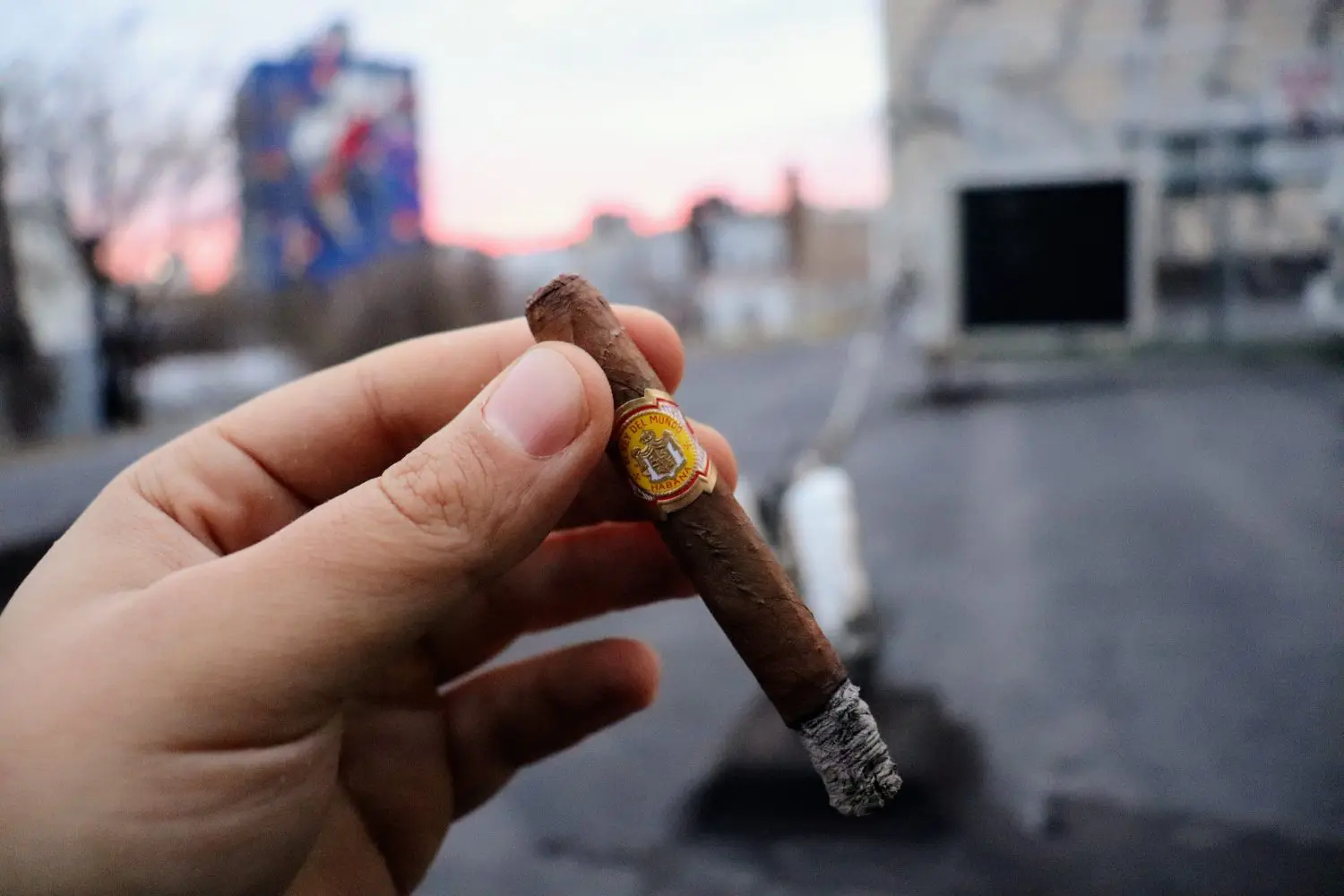
Scarcity, price increases, trade restrictions, and hype have taken Cuban cigars from a quiet luxury to the holy grail. As global recognition and prices increase, so do counterfeiters’ efforts. As we’re seeing with other luxury items like wristwatches, bags, and designer clothing, fakes (super clones and bottom-of-the-barrel knockoffs alike) have become an undeniable issue. It was once the case that a discerning eye could point out a fake from miles away, but this is no longer the world we live in. All of which begets the question: where does one acquire legitimate Cuban cigars?
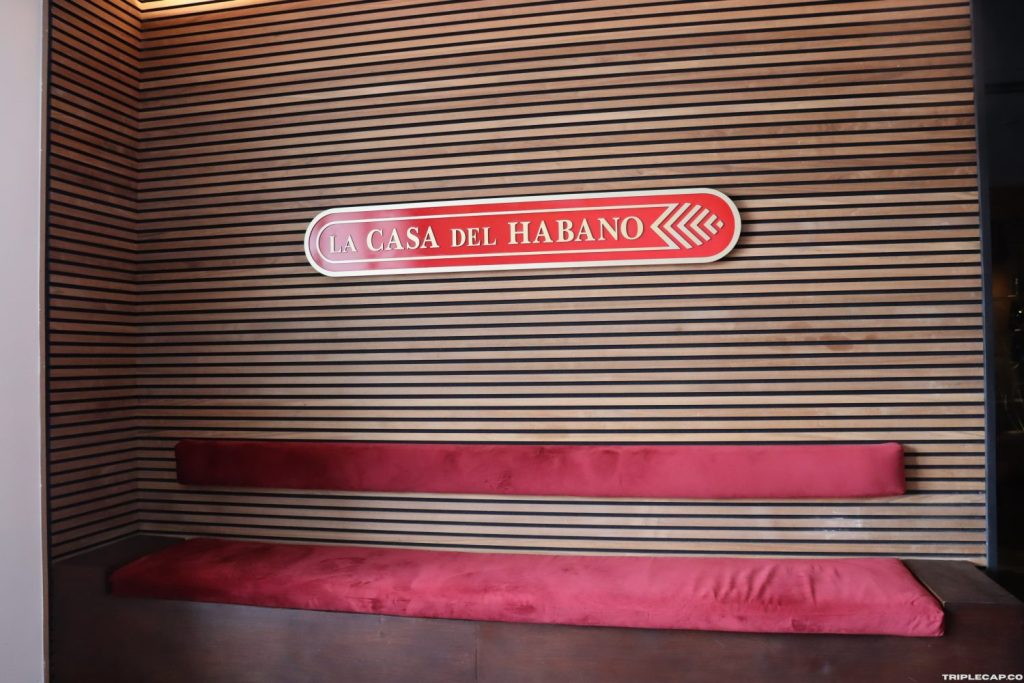
Before 1990, Habanos S.A. (formerly Cubatabaco) did not own or operate any brick-and-mortar stores. Instead, Habanos partnered with a network of regional distributors. These distributors then worked directly with stores that stocked Cuban cigars on their shelves. For example, if you were to take a trip to London’s Davidoff store on St. James and purchase a Montecristo Especiales No. 2, that cigar would have started at Habanos, then gone through the UK’s regional distributor, Hunters & Frankau, then gone to the Davidoff store before ending up in your hands. While this is still the case today, in November of 1990, Habanos opened its first flagship store, the La Casa Del Habano in Cancún, Mexico.
The La Casa Del Habano stores are a global network of franchises that offer an additional layer of security and quality for the consumer. They still purchase their cigars from the regional distributors listed above, but must abide by strict training guidelines for their staff and uphold specific standards for their humidors. LCDH staff members must attend a training program in Cuba, where they learn about the history of different marcas, terroir, growing techniques, and rolling. The stores are also randomly inspected by Habanos to ensure they’re maintaining quality and consistency standards.
Antigua & Barbuda, a gorgeous pair of islands in the middle of the Caribbean archipelago, is home to its own La Casa Del Habano. Michael, one of the partners at LCDH Antigua and LCDH St. Kitts, and Shay, the floor manager, were kind enough to sit down with us, answer some questions, show us the space, and share some stories.
Location
The La Casa Del Habano is located in Antigua’s capital city and most populous area, St. John’s. The store is located in a duty-free shopping area where cruise ships dock. The store is on the second floor, near the middle of the shopping center at Heritage Quay, Unit 210, Upstairs Kings Casino Building, St. John’s, Antigua & Barbuda. Being right in the middle of town, there were some excellent options for food nearby. We especially loved Roti King and The Patty Hut.
Q (Shon): Tell me about your background with La Casa del Habano. How long have you been operating?
Michael: We opened in St. Kitts in 2014, originally branded as Mojito’s Cuban Lounge, getting cigars from our distributor in Curaçao. Then we brought on Orlens (GM and cigar sommelier) — and that’s when we applied for and became a La Casa del Habano franchise in 2017.
The LCDH itself has lighters, cases, humidors, and ashtrays available, as well as a walk-in humidor housing the cigars we are all here to see. There is also an adjoining lounge featuring a well-stocked bar, coffee, and TVs for watching sports or movies.
Q (Shon): What does the LCDH affiliation require of you?
Michael: Quite a lot. The humidor has to meet a minimum size, you’re required to have a dedicated warehouse, and you’re not permitted to sell non-Cuban cigars. That was fine for us since we’ve always focused on Cubans. There are also things we can and can’t talk about publicly — they have very strict rules.

The Lounge
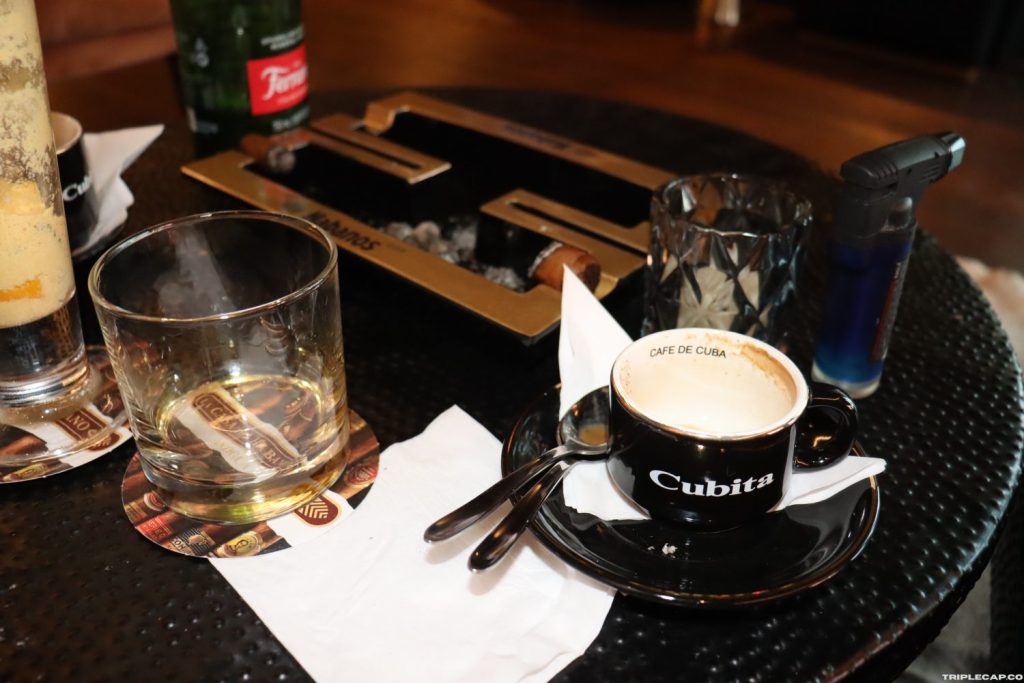
The lounge is dimly lit, with a bar at the end of the room. There are two TVs mounted: one behind the bar and one on the right wall. Both were featuring a cricket match while we were there. The couches are clean and very comfortable. There is art all over the walls. Overall, the lounge is a great vibe, and we felt very welcomed. The cocktail list features all the obligatory Cuban options like mojitos and daiquiris, but also includes a full list of house and classic options. Cuban coffee is offered, which is always a must when visiting an LCDH, especially with a splash of Baileys or Grand Marnier.
Q (Shon): You often hear non-Cuban brands using the term “Cuban-esque”. Do you think the “Cuban-esque” flavor descriptor is accurate?
Michael: Not really. I smoke a lot of cigars, mainly Cubans, and I wouldn’t say they all taste alike. A Bolívar and a Quai D’Orsay are completely different experiences. You can’t reasonably lump all the marcas together under one flavor profile.
We selected an H. Upmann Magnum 54 and a Trinidad Reyes as our smokes, and ordered two Cuban coffees, one with Baileys and one with Grand Marnier, as well as two mojitos later on. The drinks were fantastic, and the cigars were excellent as well. The Magnum 54 was exceptionally salty and mineral-forward, more so than any other Magnum 54 I’ve had. The Reyes was that breakfast cookie and coffee stick that we’ve come to expect. Shay was an excellent host and was kind enough to sit down and chat with us about her experience at the LCDH and her training in Cuba. She also guided our tour through the Humidor.
Q (Shon): Can you speak to what LCDH staff learn when they’re sent to Cuba for training?
Michael: They learn about the production process, the history, the different blends and tasting profiles, sizing, time-of-day pairings, and pairing with spirits. It’s a well-rounded education. I’ve been to Cuba a few times myself but never done the formal training — honestly Shay (manager, LCDH Antigua) probably knows more on paper than I do because of it.
Availability
It’s no secret that availability has been an issue for Habanos the past few years. Beyond most stock going to Hong Kong, Cuba has recorded record-low tobacco yields. Production is also down due to emigration. Cuban cigar rollers can 10x their salary by emigrating to neighboring countries like Nicaragua, the Dominican Republic, or Honduras.
The stock at the Casa was surprisingly good. There was a selection of budget cigars, mid-range, high, and VERY high-end offerings. There is also a house roller that makes unbanded cigars using Cuban tobacco. Their house roller is shared with the St. Kitts location, and I was told I just missed him. The house-rolled cigars are also favorites among locals because of their affordability and sell out very quickly.

By the time I had arrived, the house rolls had been completely sold out, but for people looking to smoke on a budget, there was ample stock of Vegueros, Quinteros, and cigarillos/minis/clubs from most of the brands.
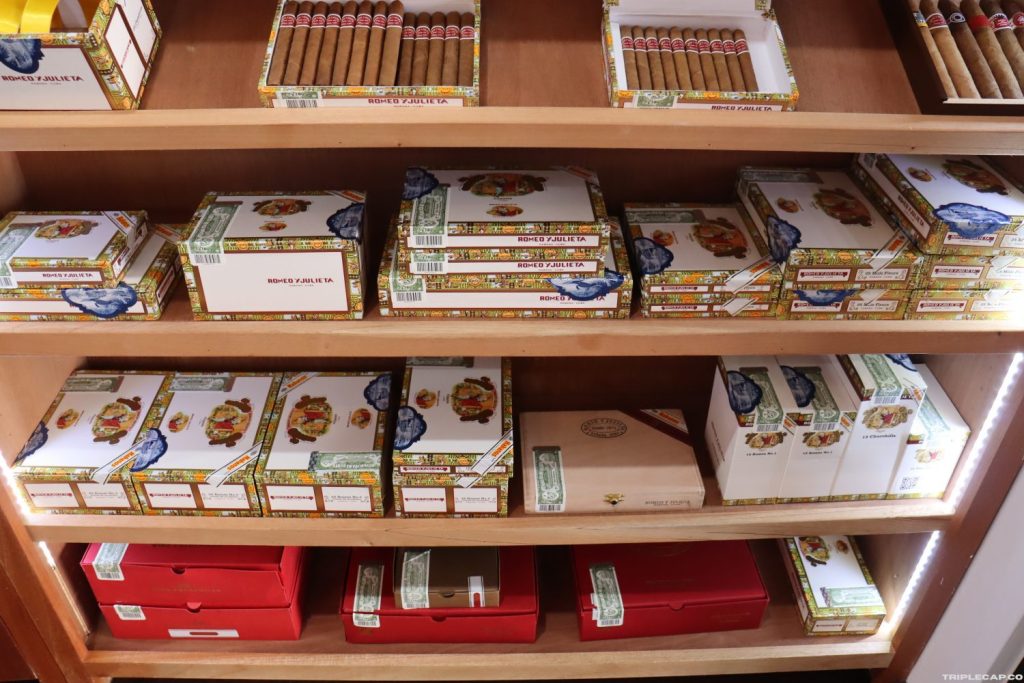
There was ample stock from Montecristo, H. Upmann, Romeo y Julieta, Partagas, San Cristobal, and Hoyo De Monterrey. However, there was little to no stock of Bolivar. I’m always excited to see Montecristo Especiales No. 2, Romeo y Julieta Belicosos, and a full box of Partagas Serie E No. 2 (which I quickly put aside for purchase).
Q (Shon): If you could bring back one discontinued blend or marca, what would it be?
Michael: My favorite cigar of all time is the La Gloria Cubana Regional Edition 2014. They made 3,000 boxes, and we’re one of the very few places that still has any for sale — and frankly, we’re trying not to sell them. It’s a Robusto, some might say it’s on the lighter side, but as a first cigar of the day, it’s just exceptional.
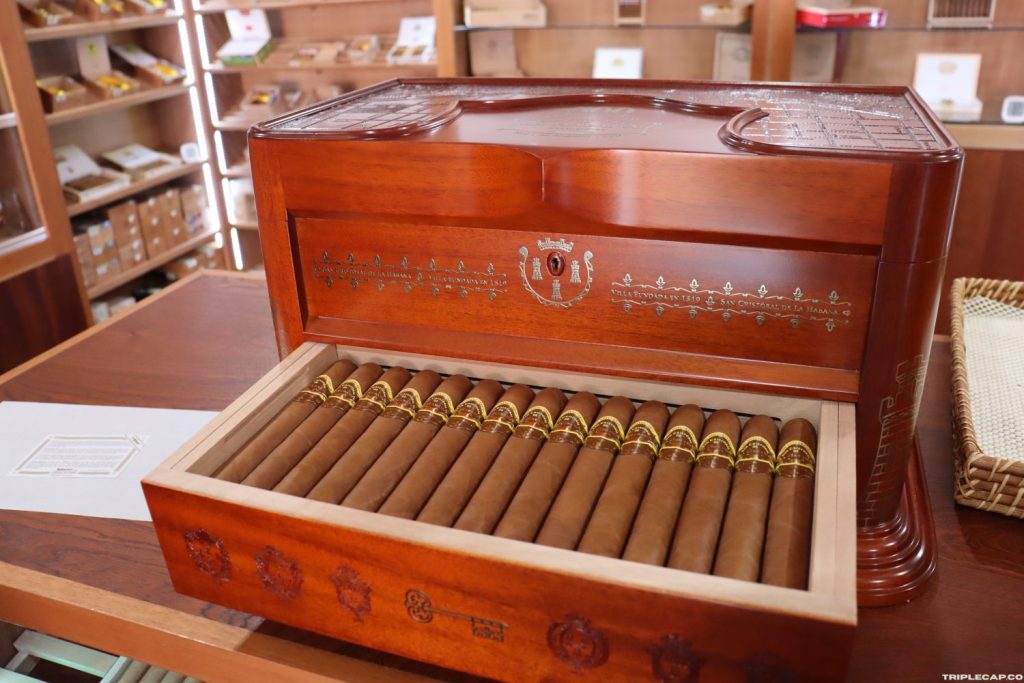
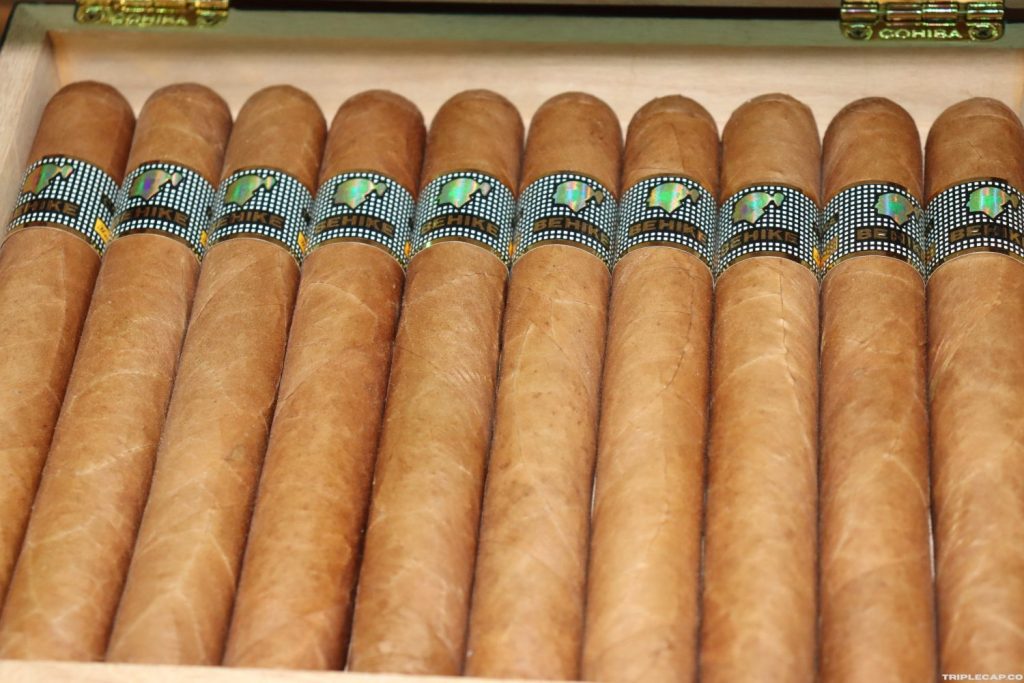
It’s not uncommon to find ample stock of Trinidad and Cohiba since the recent price increases, and that was the case here as well. I was very happy to see boxes of the Behike 52, 54, and 56 on the shelves (even at eye-watering prices). I was also pleasantly surprised to see boxes of Trinidad Fundadores available. There was also one 50-cab of Hoyo de Monterrey Double Coronas, Montecristo “A” coffins, and a partial box of Ramon Allones Gigantes (from 2016!). There were a handful of Edición Regionales and Edición Limitadas from Punch, La Gloria Cubana, Ramon Allones, and Quai D’Orsay. While it wasn’t for sale, the most impressive was a San Cristobal De La Habana humidor released in 2021. It celebrates the 500th anniversary of the founding of the city of Havana, with only 500 humidors built, numbered from 1519 to 2019.
Q (Shon): What’s the biggest difference between Edición Limitadas and regular production cigars?
Michael: Beyond scarcity and branding, the main difference is quality control. With limited editions there’s a real effort to select the best raw materials, sort them more carefully, and package the final product to a higher standard. You can be much more confident you’re getting something that meets the bar it’s supposed to. With any hand-rolled agricultural product, consistency is inherently variable — but the limitadas are about as close as you get to Whole Foods oranges versus whatever’s left in the bin.
All of this being said, stock goes quickly and is subject to change. Deliveries happen every other week or so. Availability is largely a matter of luck and timing, so your mileage will certainly vary when you stop by in person.
Security & Quality Control
There are many strong opinions about how cigars should be stored, and most people are very dogmatic in their beliefs. A simple question about how to store your cigars will spark a heated discourse. I was very happy to see that the humidor at the LCDH was maintained at a humidity of 64 RH and a temperature of 69F. Without opening this can of worms, this humidity and temperature make it nearly impossible for mold to grow or beetle eggs to hatch. Beyond ensuring the box of cigars you dropped a fat wad of cash on isn’t moldy, this environment is ideal for long-term aging and bringing out the best possible flavors from a vintage cigar. While Michael doesn’t let his cigars sit around long enough for this to be a concern, his efforts at the Casa did not go unnoticed.
Q (Shon): Where do you stand on aging, humidity, and temperature?
Michael: Personally, I rotate my stock fairly quickly. I don’t maintain a large cache of aged cigars. I think after around a year a cigar reaches a level of maturity that I find enjoyable. If you like fuller, more intense cigars, holding them too long works against you — you lose some of that boldness and gusto.

Q (Shon): What separates Cuban cigars from other terroirs?
Michael: For me it comes down to the soil and climate in Cuba — a tobacco plant just expresses the best of itself there. And the Cuban black tobacco, tabaco negro cubano, there’s something genuinely special about it. Beyond the flavor, there’s also something the brain does when you smoke a Cuban — especially as an American, where there’s a layer of nostalgia and mystique that actually influences how you taste it.
While no system is perfect, the LCDH branches are the most secure places to purchase Cuban cigars. There are hundreds of reputable stores and lounges across the globe, but none of them are scrutinized the way the Casas are. With counterfeiters getting better every day, trust is becoming harder to come by. Beyond replica bands, boxes, and certificates, many high-end fakes are well-rolled Costa Rican or Honduran cigars placed in genuine boxes with genuine bands. Random inspections and Cuban-only sourcing rules go a long way toward keeping product like that off the shelves, but they don’t guarantee it. What LCDH does offer is accountability: there’s a real storefront, an owner you can actually talk to, and a franchise agreement they’d lose if they got sloppy. Ultimately, provenance and price are our best protections — if it doesn’t pass the smell test, odds are it’s a knock-off.
Q (Shon): With counterfeiting so rampant, do you see it affecting value or authenticity?
Michael: It’s definitely a problem. I’m looking out my office window right now and there’s a duty-free across the way with a Cohiba sign in the window — and at least 50% of what’s in there isn’t real, and that might be generous. Habanos has historically relied on their verification sticker rather than aggressively pursuing counterfeiters the way Louis Vuitton or Patek Philippe would. The sticker system is more stable now and scanning it should give you the right answer — but the counterfeiters keep getting better.
Pricing
In 2022, Habanos introduced its global pricing standard, which brought the rest of the world’s prices up to match the prices in the Hong Kong market. At the time, prices in Hong Kong were as much as 400% higher than in the rest of the world. This was mainly due to extremely high tobacco taxes, and Cuban cigars becoming a trending social currency there. Grey market dealers and savvy individuals alike were scooping up all of the inventory in Europe and the Americas to flip them in Asia for a very healthy profit. Leveling the playing field between markets and equalizing inventory globally were the justification for the initial price increases. Since then, there have been further increases in 2023 and 2025. This frankly brutal wave of hikes brought prices up for marcas like Cohiba and Trinidad monumentally. Some cigars cost 5x as much as they did only a few years ago. The elephant in the room is Cuba’s ongoing financial issues, and with the sugar and rum industries actively collapsing, the nearly $1 billion-a-year industry may be Cuba’s only legitimate source of income.
Q (Shon): In 2022, Habanos introduced an international policy that greatly increased prices across the portfolio. How has the Hong Kong price-matching affected your business?
Michael: It’s made things very difficult, particularly from a regional perspective. The per capita income in the Caribbean is far lower than in European markets, so for local smokers it’s become an extremely expensive habit. Our other big market — Americans on cruise ships — is also very price-sensitive. We’ve had discussions with our distributor and with Habanos, and we’ve adjusted our prices to align more with international levels. The wholesale pricing went up globally as well. It’s all being driven by China.
All that said, this isn’t purely bad news for smokers who know where to look. Despite rising prices, there are still many excellent options in the mid- to high-range in Habano’s portfolio. At the risk of sounding like I’m calling this hobby an investment, prices are rising faster than ETFs and mutual funds, so having a box or two stored away may not be the worst financial decision (please don’t justify purchases to your spouse with this). Personally, I find marcas like Quai D’Orsay, H. Upmann, Hoyo de Monterrey, and Punch have the best value in today’s market. The blends are unique and sophisticated, delivering an excellent experience in the $20-$40 range. I’ll still splurge on the occasional double corona, or an aged example, but I have an allergic reaction to single cigars with price tags in the triple digits.
Q (Shon): People say the best day to buy Cuban cigars was yesterday. Do you agree?
Michael: Absolutely, from both a pricing and availability standpoint. The supply has diminished — and that would be a massive understatement. As with any commodity, the scarcer it becomes, the more expensive it gets. Hopefully that changes, but I genuinely don’t see how, given everything happening in Cuba right now.
Overall, the prices at the Casa were fair. Most of them were not too far from online grey-market dealers before shipping. MSRPs are set by the regional distributor (Caribbean Cigars Corporation, based in Curaçao, for this specific LCDH). While most prices are uniform across the network, some distributors set certain cigars at higher or lower prices for various reasons. Certain regions may prefer specific profiles or vitolas over others, and less popular cigars or marcas will get a small discount. For example, a 2016 box of Ramon Allones Gigantes was collecting dust at $50 per stick, while Quai D’Orsay No. 50 was priced at $30 per stick. Part of the fun of visiting an LCDH is finding what I consider to be undervalued – not only are you getting a little bargain for yourself, but it’s interesting to see regional preferences. Boxes of Trinidad Fundadores at $2400, and a 50-cab of Hoyo De Monterrey Double Coronas at $3000 were also notable price tags.
Q (Shon): How does purchasing from Habanos actually work?
Michael: Every month we receive a list from our distributor in Curaçao showing what Habanos is making available. We choose from that list, though we don’t always receive everything we order — they have to distribute to other accounts as well. We’re one of the top purchasers in the region though, so we usually get a solid selection. We also operate as a sub-distributor here in St. Kitts under Newport Investments, in addition to running the Casa.
Conclusion
So, where do you buy legit Cuban cigars? A certified La Casa Del Habano remains the closest thing to a guarantee this hobby offers. With prices rising astronomically and showing no signs of slowing, my approach to Cuban cigars has had to change. Ultimately, they are a disposable luxury. Cigars are a small gift you give to your future self, and then they become a memory. Traveling and the memories associated with it have only added to the smoking experience. Now, after ample rest, smoking will invoke reflections of the time, place, and people I was with. It’ll add to the story and the value of that cigar. The peace of mind that comes with purchasing at La Casa Del Habano, and the added bonus of not having to wait weeks (or months) for shipping, make it the best way to buy Habanos today. If you’re planning a trip to the Caribbean, make sure to carve out some room to stop at the La Casa Del Habano in Antigua, or their sister location in St. Kitts. Grab a mojito, a Cuban coffee, and make some beautiful memories.
As always, thank you so much for reading. If you’d like to continue the conversation, feel free to drop me a line at shon@triplecap.co or send me a DM on Instagram. If you’d like to help the page grow, please share with your friends, pick up some merch, or make a purchase with our affiliate links. It really goes a long way.