About Arturo Fuente
Arturo Fuente was founded by Mr. Arturo Fuente himself in 1912 in West Tampa, Florida, after he emigrated from Cuba. Originally, Arturo Fuente cigars were hand-rolled in West Tampa using Cuban tobacco. When a U.S. embargo on Cuba took effect, the Fuente family sought new tobacco sources. They experimented with growing tobacco in Puerto Rico, Mexico, Honduras, and Nicaragua before settling in the Dominican Republic. For years, it was assumed Dominican wrapper leaves would not suit premium cigars. In 1992, the Fuente Fuente Opus X, the first Dominican puro with a DR-grown wrapper, debuted. Opus X has since acquired a cult following and transformed Fuente from a brand into an industry titan. Today, Arturo Fuente is among the most notable brands, thanks to blends like the Opus X, Don Carlos, Hemingway, Casa Cuba, and Añejo.
Blend Details
The Añejo series emerged after Hurricane Georges struck the Dominican Republic in 1998, causing extensive damage and destroying much of the Fuente factory’s inventory of Opus X wrappers. In response, Carlito Fuente wrapped Dominican filler and binder leaves from the Opus X line with a cognac-barrel-aged Connecticut Broadleaf wrapper. The Añejo series made its debut in 2000 with 5 vitolas: No. 46 (Corona Gorda), No. 48 (Churchill), No. 49 (Double Corona), No. 50 (Robusto), No. 55 (Pyramid). Later additions included No. 77 “Shark” (Belicoso), No. 60 (slightly larger Corona Gorda), No. 888 (Lonsdale/Pyramid), and No. 66 (Toro). All cigars are rolled at Tabacalera A. Fuente y Cia. in Santiago, Dominican Republic.
Visual Inspection & Pre-Light
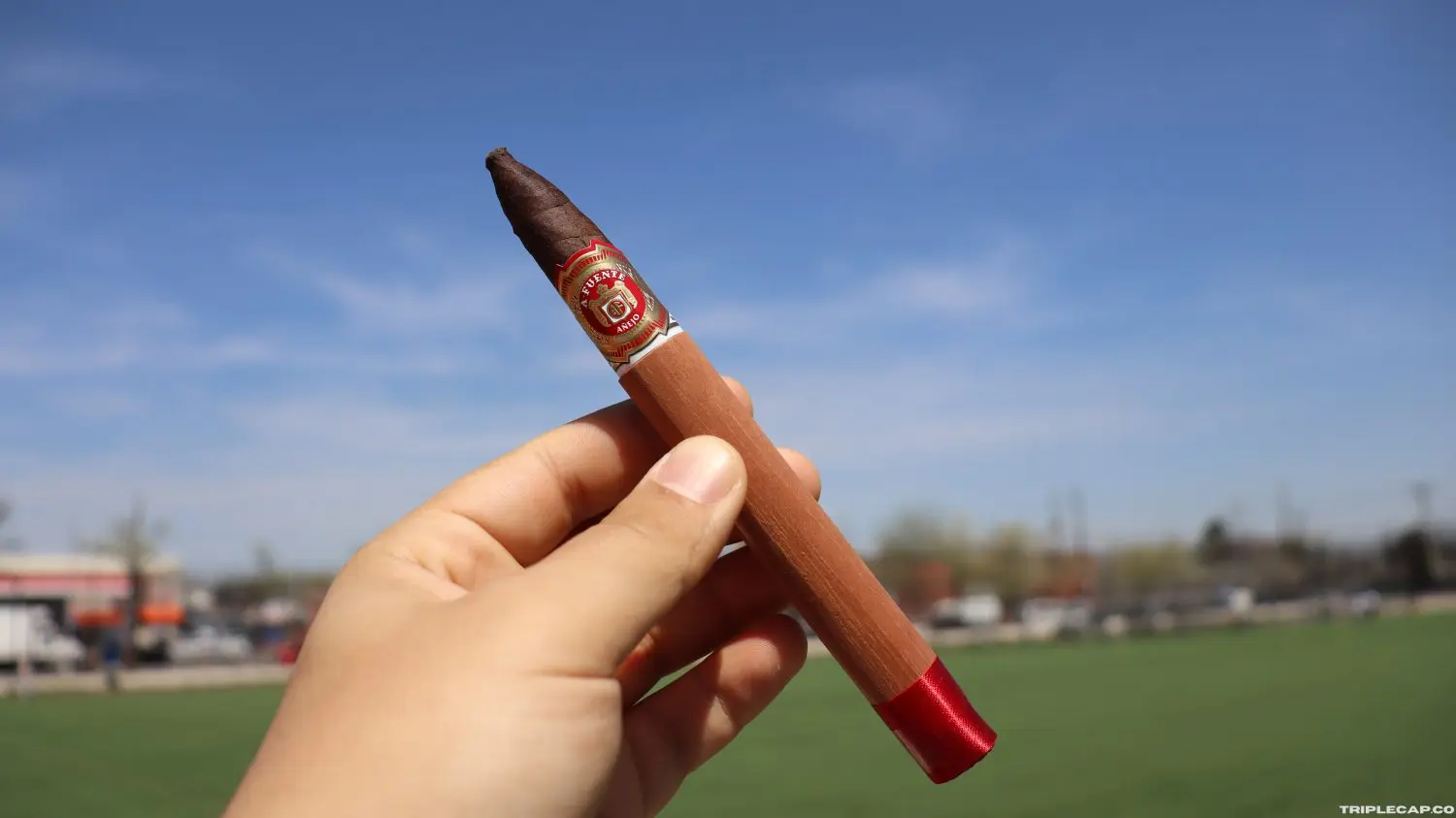
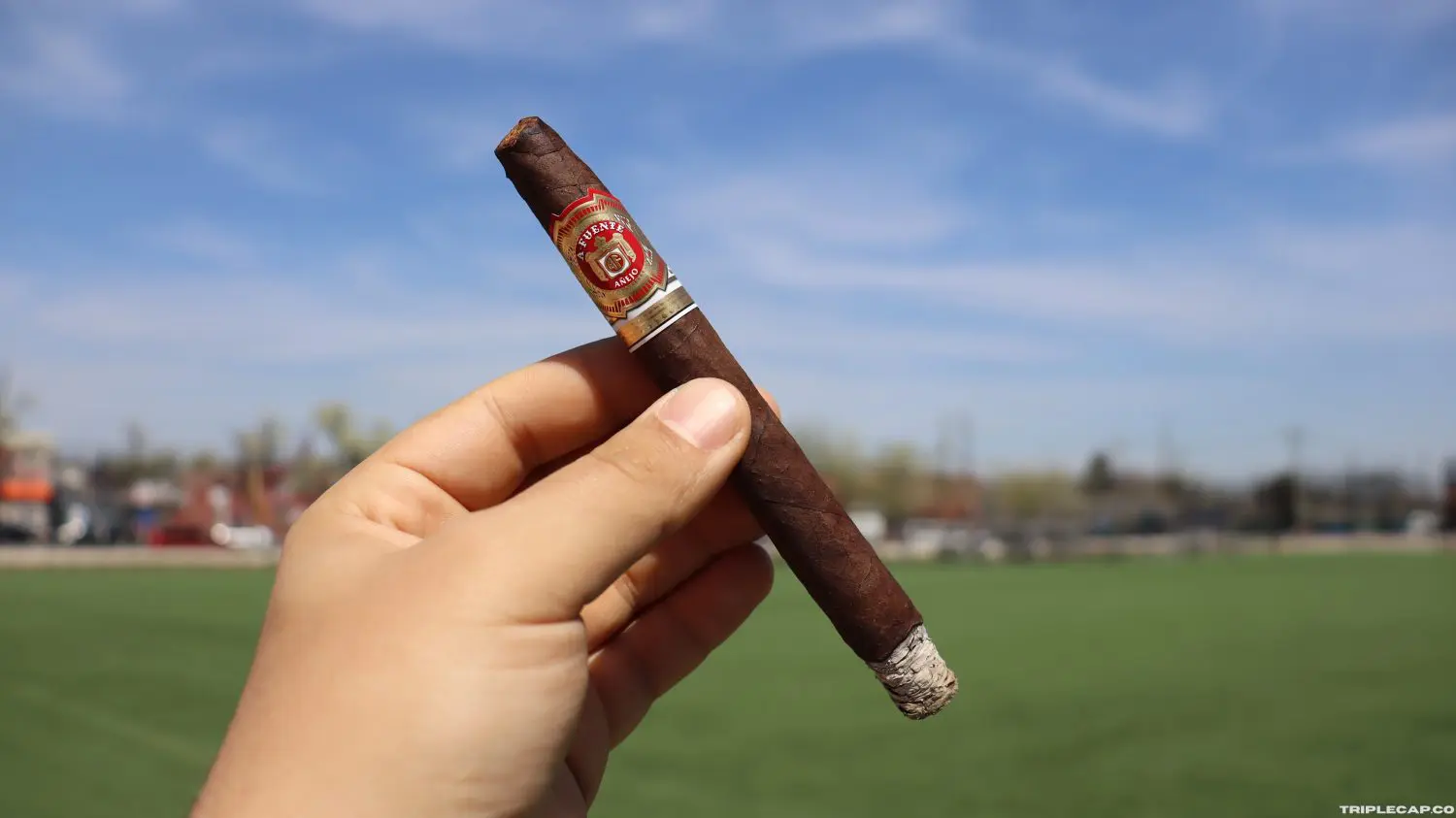
The wrapper is a dark chocolate brown with rough mottling and some visible tooth. The cap doesn’t entirely cover the head of the cigar, but leaves a small bit of it exposed. The cigar comes with a cedar sleeve and a footband held on with scotch tape. The aromas on the foot and wrapper are of sweet natural tobacco and dark, aged wood. The cold draw is slightly too snug, with notes of wet leaves and deeper, aged wood.
First Third
The smoke output starts at medium plus. The palate notes include charred oak, bibliosmia, and dry cocoa. The retrohale has tones of sweet natural tobacco, burnt sugar, dried fruits, and rye spice. The strength of flavor is medium. The finish is medium with notes of oak and rye. The overall profile has a ton of barrel-aged cognac and whiskey flavors. There are some fleeting nuances of caramels and dried fruit. The draw is just a touch too snug, but the ash and burn line are excellent.
Second Third
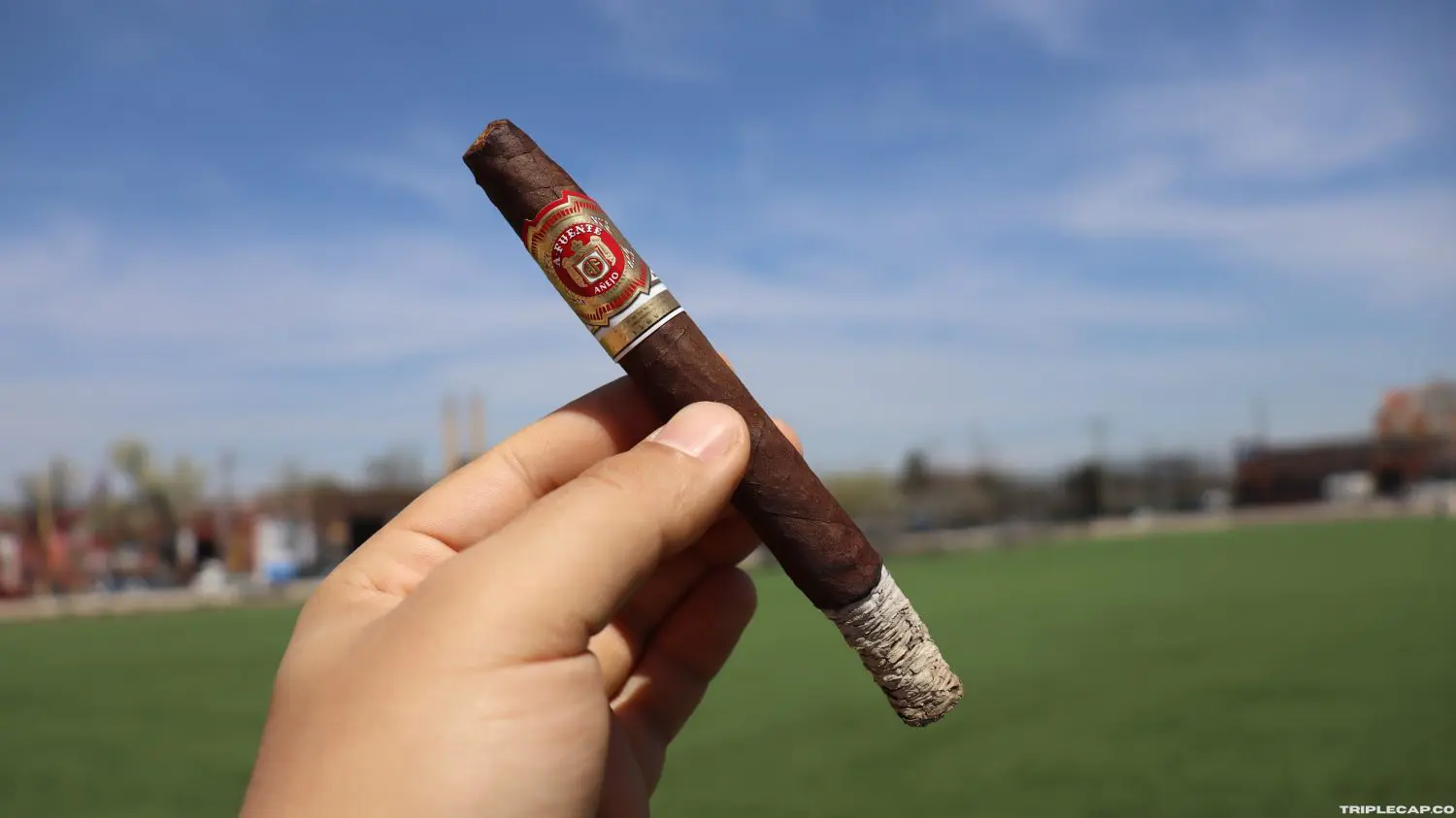
The palate has notes of charred oak, musty cedar, cocoa powder, and mineral-rich earth. The retrohale is showing sweet natural tobacco, dark chocolate, dried fruits, and rye spice. The strength of flavor remains medium. The smoke output has increased to medium plus. The finish remains medium with notes of aged woods and sweet natural tobacco. The dark chocolate and cocoa notes are now more pronounced, but the barrel character and aged-wood flavors are the clear focal points of the blend. The draw has opened up slightly, and the rest of the construction remains excellent.
Final Third
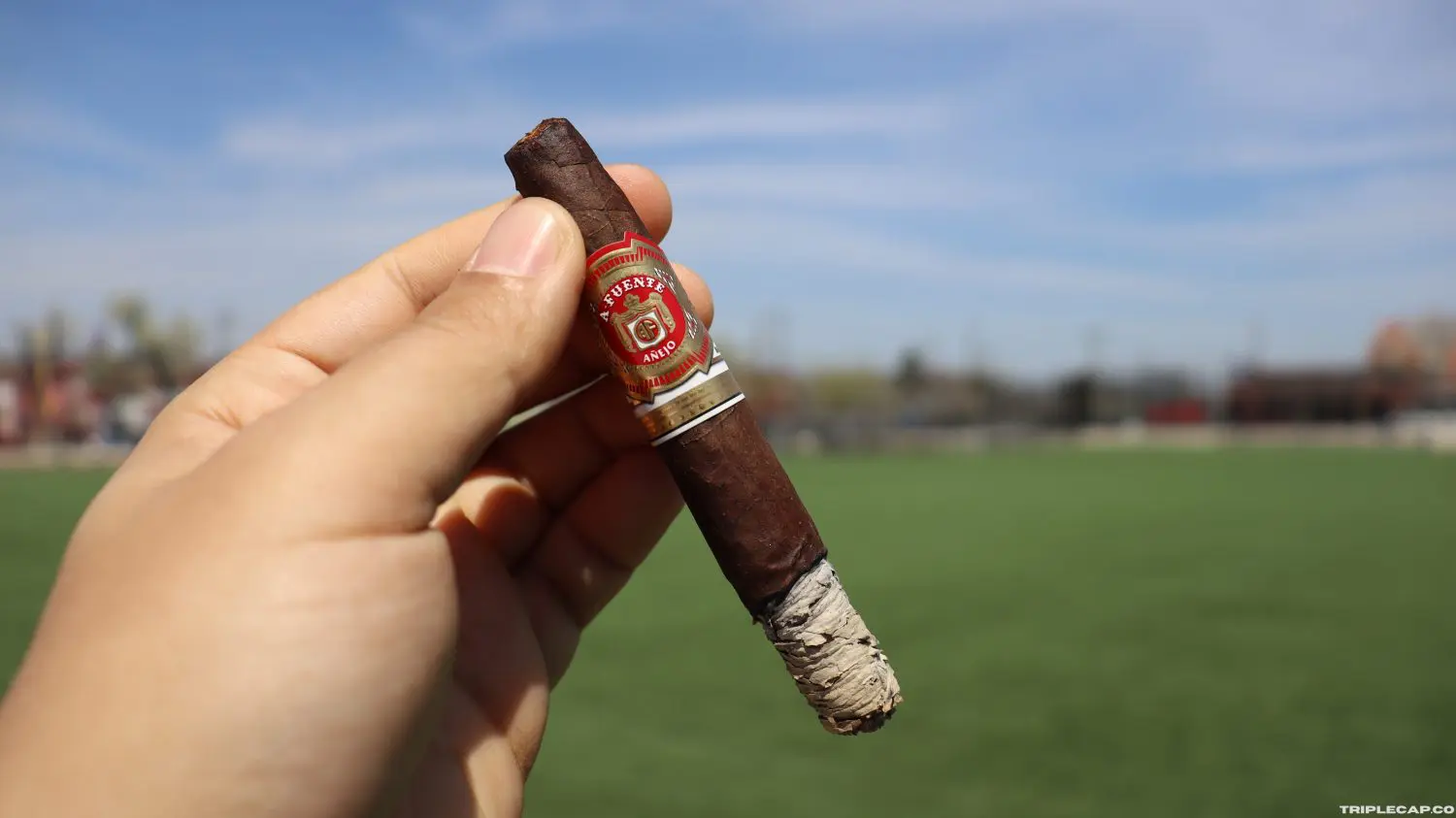
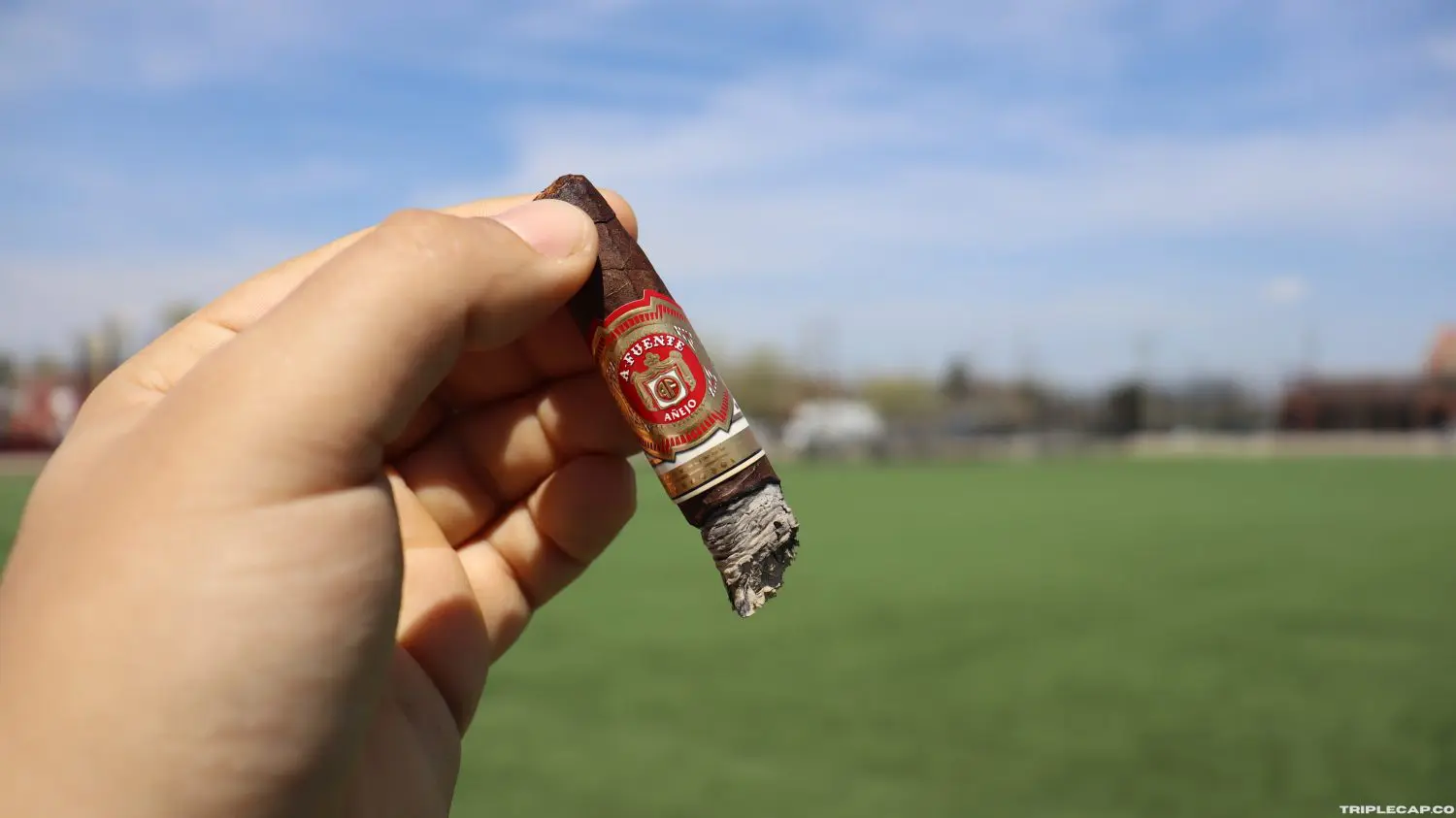
The palate notes are a mix of charred, aged, and musty woods, along with mineral-rich earth. The flavors on the retrohale are sweet natural tobacco, cocoa powder, dried fruits, and rye spice. The strength of flavor remains medium. Smoke output remains medium plus. The finish remains medium, with notes of cocoa powder and charred oak. The chocolate notes from the prior third have dried to a bittersweet/cocoa powder tone. The core of the profile is a melange of aged woods and barrel character. Past the band, flavors remained consistent. I put this one down with just under an inch left.
Conclusions
The Añejo line was born out of necessity after tragedy struck the family with 1998’s Hurricane Georges. In an ingenious move, Carlito decided to wrap the existing Opus X binder and fillers in a cognac-barrel-aged Connecticut Broadleaf wrapper. The resulting blend delivers a wealth of barrel-aged character, aged wood, and chocolate tones. The profile also included some burnt-sugar and dried-fruit nuances, which were delicious, but fleeting — I would have loved to taste more of those in the blend. While some examples started slightly too snug, the draw eventually opened up. These cigars are released in limited quantities around Christmas and Father’s Day. These cigars sell for $15-$20, a fair price for a limited-edition series. The Añejo series is blended with spirit drinkers in mind, so if you’re a fan of barrel-aged booze or appreciate rich, woody flavors, you’d love Arturo Fuente’s Añejo Reserva No. 888. Grab one if you can, and happy hunting.